

A business has money coming in and going out every day. Goods are purchased, sales are made, suppliers are paid, and customers make payments. Some transactions are settled straight away, while others remain unpaid until a later date.
With all these activities taking place, it is important to keep a proper record of what has happened. Leaving transactions until the end of the month can make things difficult. In such a case, you may have to look for old invoices, keep tabs on bank statements, or try to think back to what a particular payment was for. Keeping accurate records of everyday financial activities is an important part of bookkeeping for business owners, as it helps them understand where their money is coming from and where it is going.
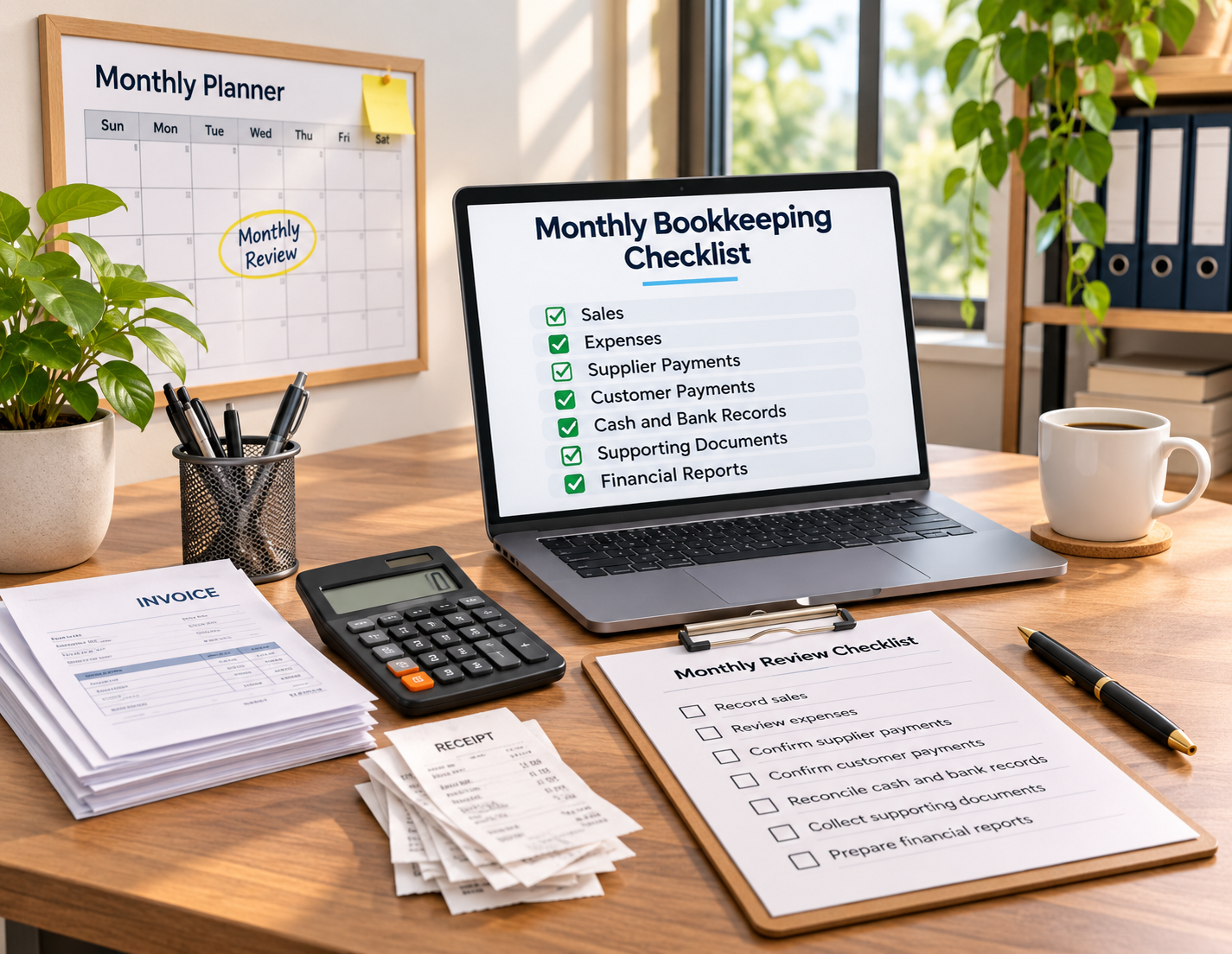
A monthly bookkeeping checklist can help you avoid this. It gives you a chance to go through your business records and make sure that all the financial activities have been entered.
You do not need a complicated system to do this. What should not be overlooked is that each transaction is recorded without missing a step and that you can see how it has affected the business. Here are the checks I would suggest making every month.
1. Check That All Sales Have Been Recorded
As the calendar pages turn, start to monitor sales. You need to review your sales invoices, receipts, and payment records. Make sure that every sale has been entered, whether the customer paid in cash, by card, or through a bank transfer.
Suppose your business made 25 sales during the month. You should be able to find a record of each one. If a customer has paid only part of an invoice, the amount received and the amount still due should both be shown.
Do not assume that because money has appeared in your bank account, the sale has been properly recorded. You should know where that money came from and which transaction it relates to. The same applies to cash sales. Money received by the business needs to be recorded; otherwise, your books will not show all the sales that have taken place. For more practical examples, read our guide on how to record cash transactions in a business, which explains how to document money received and payments made.
2. Go Through Purchases and Expenses
Now look at what the business has bought and paid for. You may have invoices for stock, packaging, office supplies, rent, electricity, delivery, or other expenses. Check each one against your records.
For example, if you purchased office supplies for $150 but have not entered the transaction, your records will not show the full amount spent by the business. Do not overlook smaller payments either. They may seem unimportant on their own, but they are still part of the business’s financial activities.
You should also keep personal spending separate from business expenses. If the owner takes money from the business for personal use, record it correctly. It should not be entered as an ordinary business expense.
3. Find Out What Is Still Owed to Suppliers
Buying goods and paying for them are two different things. A supplier may deliver goods today and allow the business 30 days to pay. The business has received the goods, but the amount owed to the supplier is still outstanding. Go through your supplier invoices and check what has been paid, what has been partly paid, and what is still due.
For example, ABC Supplies sends an invoice for $800. The business pays $500 during the month. The records should show the original invoice amount of $800, the payment of $500 and the remaining $300. If you forget to enter the payment, your books will still show that the business owes $800. That is not the actual position. To manage these transactions more effectively, explore our guide on how to track supplier invoices and outstanding payments in Excel, which explains how to monitor supplier balances and payments.
Check supplier statements when they are available. If the amount shown by the supplier does not agree with your records, find out why.
4. Check What Customers Still Owe
The same attention needs to be given to money customers have not yet paid. Suppose you sell goods worth $1,000 to a customer and allow payment at a later date. The customer pays $600 during the month. Your records should now show that $400 is still due. Go through your unpaid invoices and enter any payments received. Check whether customer has paid fully, part paid or still owes original amount.
Don’t show an invoice for $1,000 outstanding if the customer has already paid you $600. The record should reflect what is actually owed. This is important because money owed to customers is not the same as money received by the business.
5. Check the Cash and Bank Records
Your business can make and receive payments by bank account, cash, cards, or online payment services. These transactions should be shown in your bookkeeping records. Bring your bank statement and compare it with your books.
Check that deposits, supplier payments, bank charges, and other transactions have been entered. Do the same with the cash records. Suppose your bookkeeping records show a bank balance of $2,400, but the bank statement shows $2,350. There is a difference of $50.
Do not simply change one figure to make it agree with the other. Find out what has caused the difference.
6. Make Sure You Have the Supporting Documents
Every amount entered in your books should be supported by the relevant document. If you have recorded a purchase, keep the invoice or receipt. If you have entered a payment, keep the payment confirmation or other evidence. Sales should also have the relevant records. It is worth arranging these documents so that you can find them when needed.
You can keep separate folders for sales, purchases, expenses and payments. If you store them electronically, use the supplier name, invoice number and date to identify each document. Keeping these documents organised also makes it easier to understand how business transactions become financial records and why each entry should have supporting evidence.
7. Look at What Your Financial Reports Show
Once you have checked the transactions, take a look at the financial reports. Do not just look at the final figures. Find out where they have come from.
If expenses have increased, look at the purchases and payments that account for the change. If customers owe more money, check the unpaid invoices. If a supplier has been paid, see how that payment has changed the amount outstanding. Ask yourself:
- How much money has the business received?
- What has it paid out?
- What do customers still owe?
- How much does the business owe its suppliers?
- What financial activities have changed the business’s position?
You should be able to go back to the entries and see why the figures are what they are. This is what bookkeeping should provide. The owner should not have to wait for someone else to explain what has happened in the business. The records should show the effects of the financial actions as they are entered.
9. Deal With Anything That Needs Attention
Check any incomplete or further investigation entries before you complete your monthly check. Perhaps an invoice has not been entered, a payment does not agree with the bank statement, or a supplier has sent an amount that needs checking.
Make a note of these items and follow them up. Do not leave unexplained differences sitting in the books. Once everything has been checked, save a copy of the records and keep the supporting documents safely. You may need to refer to them later.
Should You Wait Until the End of the Month to Record Transactions?
No. The monthly checklist is meant to help you check the records, not start making them. When a sale takes place, record it. When goods are purchased, enter the purchase. When a customer pays, or you pay a supplier, update the relevant entry.
If you leave everything until the end of the month, you may find yourself searching through emails and receipts or trying to remember what a payment was for.
Final Thoughts
A bookkeeping checklist is useful because it helps you make sure that nothing has been missed and that your records show what has actually happened in the business.
Every financial action has an effect. A purchase, a sale, a payment, or money received from a customer changes something in the business. These changes should be recorded when they take place. The owner should be able to follow those entries and understand how they affect the financial reports. There should be no need to guess what has happened or wait until the end of the year to find out. Good bookkeeping starts with recording the facts and keeping those records up to date.